
Audio & video experience
- Concealed projection and equipment placement
- Distribution of video sources and audio between rooms
- Room-by-room system control without unnecessary remotes
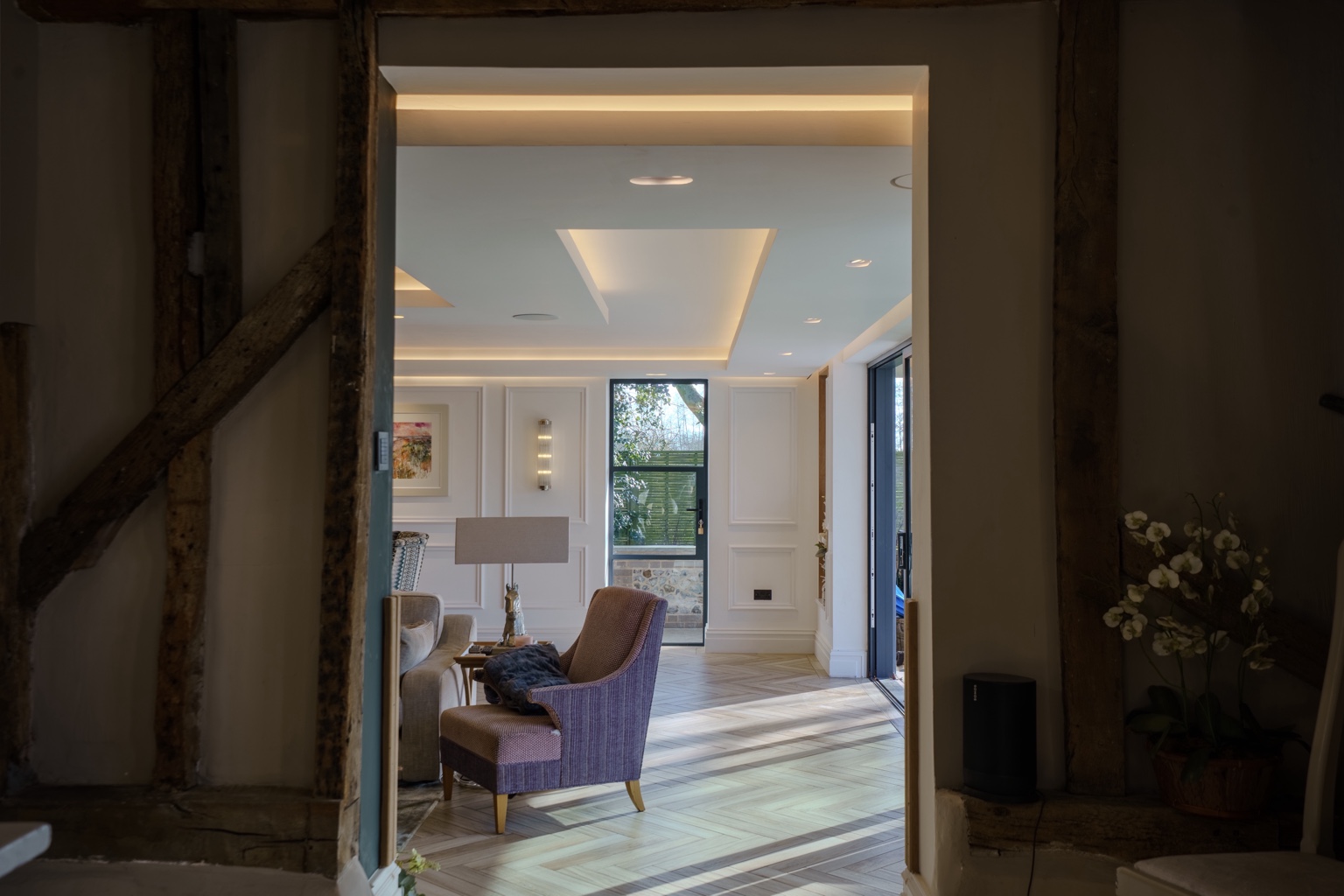
Concealed projection, thoughtful lighting and intuitive control—all considered as part of the interior rather than added afterwards.
The featured concealed screen comes from Winfield demonstration footage, showing how a living space can adapt for cinema without permanently dominating the room. Other portfolio photographs demonstrate lighting and the Control4 interface, but are not claimed to show the same property.
A genuinely integrated smart home considers the technology at first-fix, places the right infrastructure where it is needed and makes the finished operation intuitive. The screen, audio, lighting scenes and control interfaces should all feel like part of the space.
A real cinema-screen demonstration alongside separately identified portfolio examples of lighting and controls.
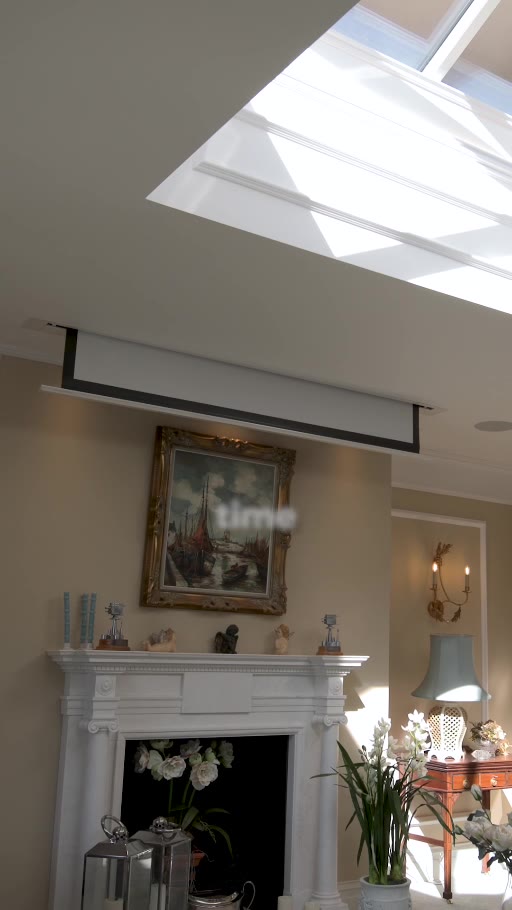
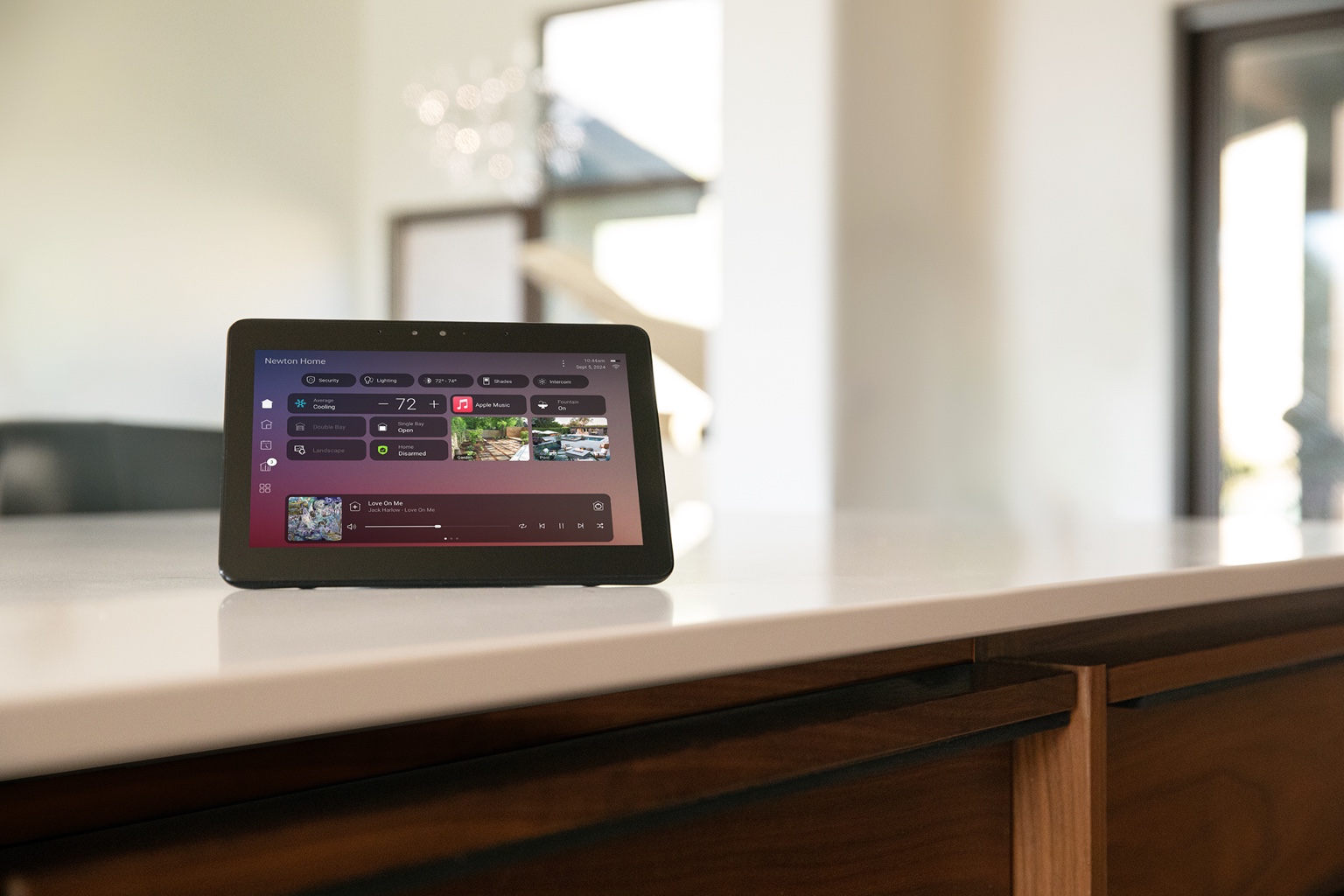
These are demonstrations and portfolio examples, not a claim that every shown device was installed at one property.
The concealed-screen image comes from Winfield cinema demonstration footage. It shows one design principle: the screen and technology can remain unobtrusive until they are needed. Other photographs on this page illustrate complementary lighting and home-control interfaces; they are not a claim that every pictured device was installed together at one property.
Screen dimensions, projection throw, seating position, light control, speaker placement and ventilation all influence the room. A concealed installation also needs access for maintenance and appropriately sized pathways for power, data and signal cabling. The best equipment choices follow the architecture and intended daily use.
A coordinated system can bring lighting scenes, audio sources, TV or projection and room controls together where the selected equipment supports it. Programming and commissioning make the difference between a collection of devices and an intuitive experience. The scope is confirmed for each home rather than assumed from a generic demonstration.
Explore the actual construction and systems work behind this project. Read the documented evidence and related technical field notes.
Discuss your plans with the relevant Winfield specialist.
Start your project